foodCIRCUS: The project to combat food waste in schools enters a key phase
The Department of International Business is pleased to share that the foodCIRCUS project continues across Central Europe in its next phase focused on preventing food waste in school canteens. During the March General Assembly Meeting in Bologna, Italy, the current results of the pilot activities, their evaluation and further planned steps were presented. The aim is not only to reduce the amount of food waste in schools and kindergartens, but also to create transferable and long-term sustainable solutions for the entire region.
Pilot activities: from order optimization to surplus redistribution
The first group of activities focuses on the implementation and evaluation of measures against food waste in schools. The main pilot actions include four areas: raising awareness of the issue of food waste, optimizing meal orders, and redistributing ordered but undelivered meals.
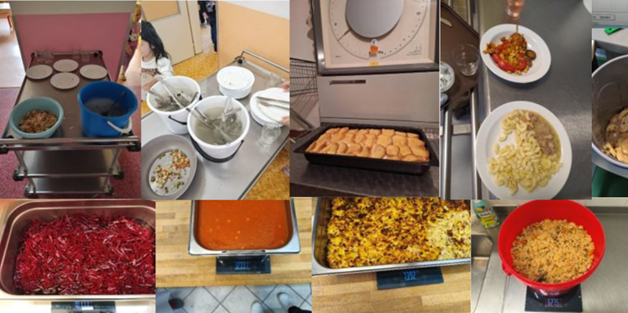
The Austrian partner BOKU completed a two-day sorting analysis in 23 educational institutions – primary schools and kindergartens – and has already handed over the results to the participating schools. At the same time, a pilot of order optimization was carried out in two schools, where uncollected portions and total food losses were monitored. After a two-week measurement, the amount of meals ordered was reduced and further measurements were made.
Another important area is the redistribution of unused meals. In Austria, data on uncollected portions was collected from approximately 100 schools for three months and communication was carried out with authorities and charitable organizations about the legal conditions for sharing this food.
Czech Republic: pilot expansion to Brno
Prague University of Economics and Business created materials for kindergarten and primary school students to increase their knowledge of food waste and its prevention, which are now used by almost two hundred schools throughout the Czech Republic, and which will thus suitably complement other activities carried out in the project with the aim of reducing food waste.
In addition to the Prague University of Economics and Business, the registered association Zachraň jídlo is also involved on behalf of the Czech Republic, which is currently focusing mainly on expanding the pilot redistribution of school catering surpluses. After a series of negotiations with schools and local governments, the cooperation is being finalized, for example with the Barrandov Elementary and Kindergarten School in Prague, while other institutions are in the negotiation phase or have rejected the pilot mainly due to lack of staff, low surplus volume or disagreement of the founder.
Hungary: redistribution brings quick returns
The Hungarian partner UVMB has already implemented redistribution in cooperation with the Hungarian Food Bank Association in six schools. Initial results show that approximately 10% of the prepared food is saved and the return on investment is achieved within three months.
At the same time, awareness-raising activities are taking place in schools and teaching materials for teachers are being created. This includes presentations for students, methodological sheets for teachers, and the involvement of schools in poster challenges and other communication activities.
Italy: the social norms test did not bring the expected effect
The Italian partner UNIBO tested an intervention aimed at reducing the waste of vegetable side dishes among primary school students using posters based on social norms. The research involved 22 schools, 37 classes and approximately 650 nine-year-old children.
However, the results showed that the posters alone did not lead to a statistically significant reduction in waste from the supplements. The researchers point out that a one-time intervention without repeated reinforcement of the behavior is probably not enough and future research should work with multi-component approaches and a longer period of action.
What comes next
The result of the entire project will be not only analytical reports, but also practical methodologies and freely available educational materials for schools, teachers, parents and canteen operators. The recommendations will be available in English and in the national languages of the partners and will be based on the cause-solution principle so that schools can easily find measures appropriate to their specific conditions.
The foodCIRCUS project is thus moving from pilot testing to systemic recommendations that can help schools across Europe reduce food waste in the long term while strengthening the environmental and economic sustainability of the school .